
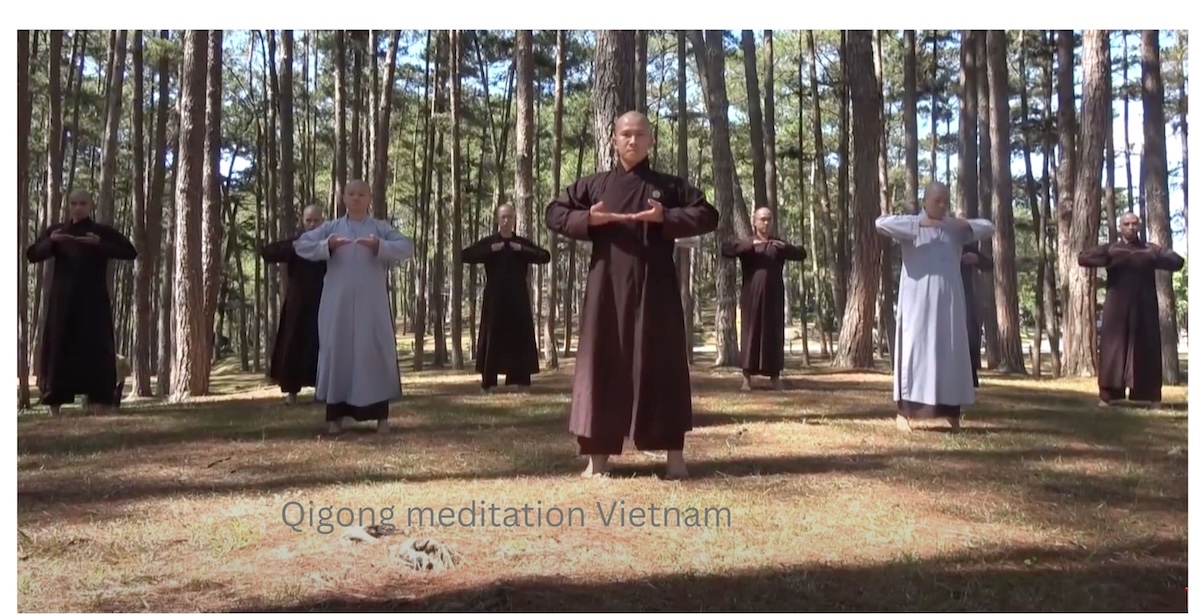
30 Oct Qigong Meditation Techniques: Calming the Mind & Halting Thought
Before starting, understand that no single technique works for everyone—it depends on each individual, situation, and timing. The ultimate goal of managing thoughts is to achieve “no-thought thinking,” which means adjusting the mind without consciously trying to do so. As you progress, mental control becomes natural, allowing the mind to be free and neutral.
Methods to Stop and Observe Thoughts
“Stop” means to halt, and “Observe” refers to examining thoughts as they arise. When a thought emerges, stop it immediately to prevent further development. This practice, called “Stopping and Observing,” involves becoming aware of thoughts and halting each one to achieve a clear, still, and peaceful mind.
Three Steps to Stop Thoughts
- Binding and Stopping Method: Focus your awareness on one point, like the nose (for breathing) or the Lower Dantian (below the navel) to control thoughts.
- Taming Method: After binding thoughts, you need to calm them. Understand why thoughts persist, then address those causes to achieve a tranquil state.
- Reality Understanding Method: Analyze the causes of recurring thoughts. Once understood, lead the mind to grasp reality, achieving true mental stillness.
Once the mind attains real tranquility, scattered thoughts stop, and true mental adjustment is realized.
Three Ways to Calm the Mind
There are three methods to observe and investigate your thoughts, known as the Three Perspectives:
- Empty Perspective (Không Quán): Observe the nature of all things—how they originate, change, and dissolve—realizing their impermanence and illusion. This helps prevent the mind from generating new thoughts.
- Imaginary Perspective (Giả Quán): Analyze past and future situations to control your present state of mind, acknowledging their imaginary nature.
- Middle Perspective (Trung Quán): Recognize the fleeting nature of emotions and desires, focusing on the present moment.
Visualization Method
“Visualization” involves focusing on an image, like the Buddha or the moon, to stabilize thoughts and bring mental clarity. This technique helps calm the mind by channeling thoughts toward a peaceful focal point. It’s widely used in both Buddhist and Daoist meditation.